

The Shingles Timeline: When Are Shingles Most Contagious?
At Inovo Spine, Dr. Pawan Grover helps patients understand that shingles is most contagious when the blisters are active, filled with fluid, and not yet crusted over. The risk of spreading the virus drops once all blisters dry and scab completely. Knowing the shingles timeline can help you protect others, manage symptoms early, and seek timely care if pain continues. For more information, contact us or book an online appointment. We are conveniently located at 1140 Business Center Dr, Suite 110, Houston TX 77043.
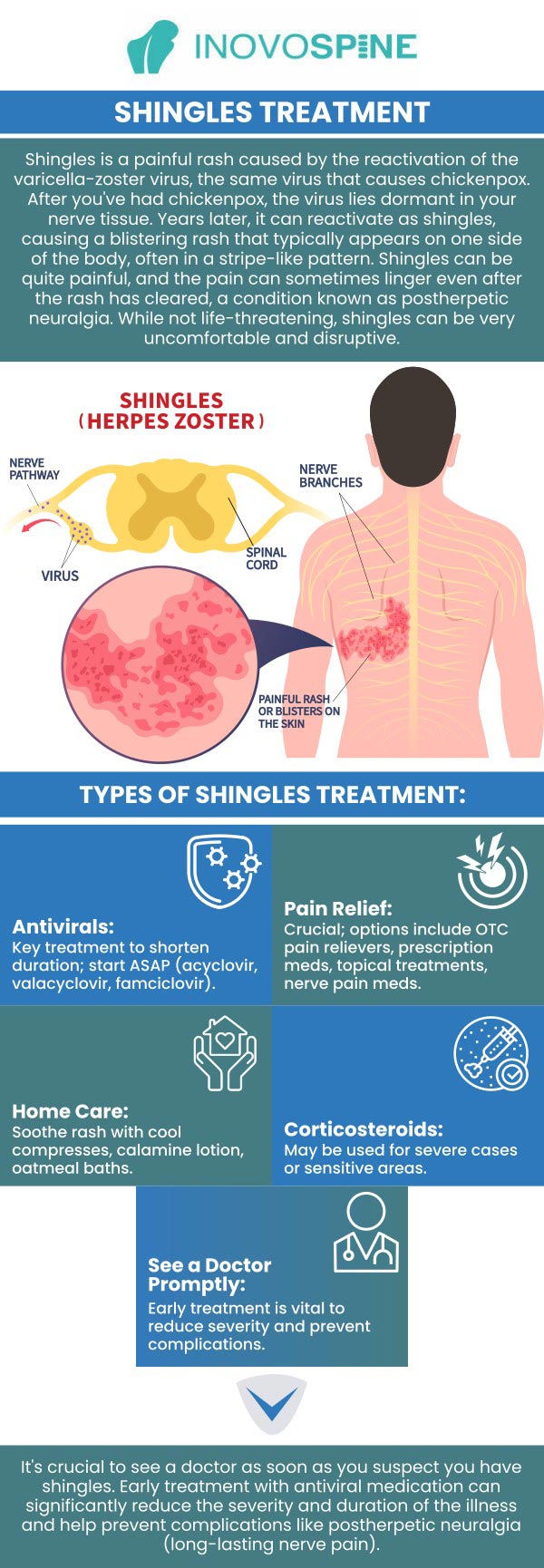
Table of Contents:
At what exact point do shingles blisters stop being contagious to others?
Can I spread shingles to someone who has already had the chickenpox vaccine?
How long does the “tingling” phase last before the actual rash appears?
What should I do if my shingles pain continues even after the rash has completely healed?
If I am in the post-contagious phase but still suffering from intense burning, can a sympathetic nerve block at Inovo Spine “reset” my pain receptors?
At Inovo Spine, one of the most common shingles questions is about exactly when shingles stops being contagious. In simple terms, shingles is considered contagious until every blister has dried out and formed a full crust or scab. That is the key point. If the rash is still wet, leaking, or forming new blisters, the virus can still spread through direct contact with the fluid inside those blisters.
It is also important to know what “contagious” means here. You do not usually give someone shingles directly. Instead, you can spread the varicella-zoster virus, which may cause chickenpox in someone who has never had chickenpox or has never been fully protected by vaccination. That is why covering the rash matters.
Most shingles blisters crust over within about 7 to 10 days, but complete healing can take longer. Until all blisters are fully scabbed, Inovo Spine recommends avoiding close skin contact, not sharing towels, and keeping the rash covered as much as possible. Good handwashing is also important.
At Inovo Spine, patients often ask whether shingles can still spread to a person who has already received the chickenpox vaccine. The simple answer is: the risk is much lower, but not always zero. A vaccinated person is usually much better protected against the virus than someone who has never had chickenpox or never been vaccinated. However, no vaccine gives a 100% guarantee for every person.
Shingles spreads through direct contact with the fluid from active blisters, not usually through casual passing contact. So even if someone has been vaccinated, it is still smart to keep the shingles rash covered and avoid touching the blisters. This is especially important for pregnant women, newborns, people on chemotherapy, transplant patients, and anyone with a weak immune system.
In many cases, a vaccinated person who is exposed will not become sick at all. If they do get infected, symptoms may be milder than in an unvaccinated person. Even so, Inovo Spine advises taking precautions until every blister has crusted.
The safest approach is to act as though the rash could still pose a risk, especially in homes or workplaces where vulnerable people are present. Inovo Spine supports early antiviral care and clear infection-control steps to help reduce spread and support recovery.
At Inovo Spine, many patients describe a strange tingling, burning, itching, or stabbing feeling before any shingles rash appears. This early stage is called the prodromal phase. In simple terms, this phase usually lasts about 1 to 5 days before the rash shows up, but in some people it can be shorter or slightly longer.
The reason this happens is that the shingles virus becomes active again inside a nerve. Before the skin changes are visible, the irritated nerve may send abnormal pain signals. That is why the feeling may seem confusing at first. Some people think they pulled a muscle, slept wrong, or have a pinched nerve. Others feel skin sensitivity, light touch pain, or a deep burning band on one side of the body.
The classic shingles rash usually appears in a stripe-like pattern on one side of the chest, back, face, or abdomen. Once the rash appears, the diagnosis becomes easier. Inovo Spine reminds patients that severe burning or tingling without a rash should still be taken seriously, especially if it is one-sided and unusual.
At Inovo Spine, ongoing pain after the shingles rash has healed may be a sign of postherpetic neuralgia, often called PHN. This is a type of lingering nerve pain that can remain for weeks, months, or longer after the skin looks better. The rash may be gone, but the nerve can still stay irritated and send burning, stabbing, or electric pain signals.
If this happens, do not ignore it. Start by seeing a qualified medical professional for a full evaluation. Continued shingles pain is not just “in your head,” and it should not be brushed off. Common treatments may include nerve-calming medicines, prescription creams or patches, and pain-focused rehabilitation strategies. Good sleep, stress control, and skin protection also matter because even a light touch can feel severe in PHN.
At Inovo Spine, patients with lingering burning pain are often advised to avoid friction on the skin, wear soft clothing, and track what makes symptoms worse. Heat and pressure may aggravate nerve pain in some people. If pain is interfering with sleep, work, or daily movement, a specialist visit becomes even more important.
At Inovo Spine, a sympathetic nerve block may sometimes be discussed for severe, ongoing burning pain after shingles, especially when the rash is no longer contagious, but the nerve pain remains intense. The simple way to explain it is this: a sympathetic block does not literally “reset” pain receptors like flipping an off switch forever. Instead, it may interrupt abnormal pain signaling, calm the overactive nerve response, and give the body a better chance to settle down.
For some patients, this can bring meaningful relief, sometimes quickly. It may also help improve sleep, reduce burning, and make movement easier. In other patients, relief may be partial or temporary. The result depends on how long the pain has been present, which nerves are involved, and whether the pain pattern truly fits a sympathetic component.
At Inovo Spine, the right plan from Dr. Pawan Grover depends on a proper exam and a review of your symptoms, timing, and nerve pattern. Dr. Grover may also consider other treatments along with the block, since nerve pain often responds best to a combined approach rather than one step alone.
If you are asking specifically about Dr. Grover, the best next step is to confirm whether he recommends a sympathetic nerve block or another image-guided option based on your exact shingles-related pain pattern and recovery stage.
For more information, contact us or book an online appointment. We are conveniently located at 1140 Business Center Dr, Suite 110, Houston TX 77043. We serve patients from Houston TX, Hedwig Village TX, Meadows Place TX, Missouri City TX, Hunters Creek Village TX, Spring Valley Village TX, and surrounding areas.

Additional Service You May Need
- Regenerative Medicine
- Spinal Arthritis
- Diagnostic Mapping
- Interventional Pain
- Minimally Invasive
- Spine Pain
- Radiofrequency Ablation
- Spinal Cord Stimulation
- Physical Rehabilitation
- Facet Joint Pain
- Herniated Discs
- Muscle and Joint Pain
- Post-Laminectomy Pain
- Myofascial Pain
- Peripheral Nerve Pain
- Regional Pain Syndrome






 Send Text
 How May I Help You?