

Why Does My Leg Go Numb When I Stand? Understanding Spinal Stenosis
Experiencing numbness in your leg while standing can be both confusing and alarming. Many individuals notice that the sensation improves when they sit or bend forward, only to return when they stand or walk. One of the most common underlying causes of this pattern is spinal stenosis, a condition that affects the spinal canal and the nerves exiting it. At Inovo Spine, Dr. Pawan Grover diagnoses and treats spinal stenosis with a personalized approach tailored to your symptoms and lifestyle. In this article, we’ll explain how spinal stenosis leads to leg numbness and answer the most frequently asked questions about the condition. For more information, contact us or book an online appointment. We are conveniently located at 1140 Business Center Dr, Suite 110, Houston TX 77043.
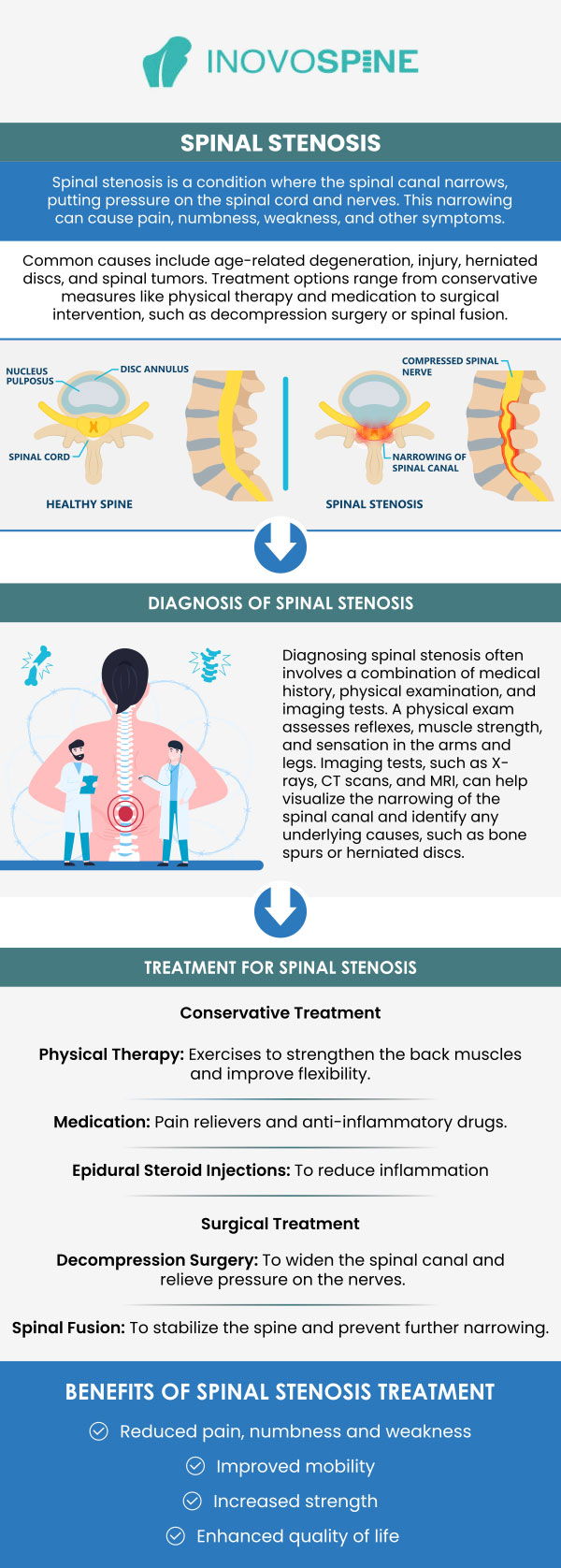
Table of Contents:
How Does Spinal Stenosis Cause Leg Numbness When Standing?
What Are the Common Symptoms of Spinal Stenosis?
How Is Spinal Stenosis Diagnosed?
What Conditions Increase the Risk of Developing Spinal Stenosis?
How Does Inovo Spine Determine if Numbness Is Caused by Spinal Stenosis or Another Condition?
Spinal stenosis occurs when the spaces within your spine narrow, placing pressure on the spinal cord and the nerves that travel through the vertebrae. This narrowing most commonly affects the lumbar spine (lower back) and can directly influence nerve roots that provide sensation and movement to your legs.
When you stand or walk upright, several things happen that can make symptoms of spinal stenosis — like leg numbness — worse:
1. Increased Spinal Extension
Standing straight places the spine in a more extended (arched) position. This reduces the space in the central spinal canal and the nerve passageways (foramina), increasing pressure on nerve roots.
2. Nerve Compression
As the space around the nerves shrinks, nerve irritation or compression worsens. Nerves controlling the legs may send abnormal signals, resulting in:
● Numbness
● Tingling
● Weakness
● Pain that radiates into the legs
3. Relief With Forward Flexion
When you bend forward — such as when sitting or leaning over a shopping cart — the spinal canal opens up slightly. This alleviates pressure on the nerves and is why many people with spinal stenosis feel better in a flexed position.
At Inovo Spine, Dr. Pawan Grover evaluates how positional changes affect your symptoms to determine if spinal stenosis is truly the source of your leg numbness.
Spinal stenosis can manifest in a range of symptoms depending on where the narrowing occurs and how severely nerves are affected. Common signs include:
1. Leg Numbness or Tingling
A hallmark symptom — often most noticeable while walking or standing — that may improve with rest or flexion.
2. Weakness in the Legs
You may feel like your legs are “giving out” or less stable when walking.
3. Back Pain
Some individuals experience localized lower back discomfort accompanying numbness.
4. Pain That Radiates to the Legs
This is sometimes described as a “pinched nerve” feeling or shooting pain down the back of the leg.
5. Difficulty Standing or Walking Long Distances
Many patients with spinal stenosis describe a need to stop frequently while walking due to numbness, discomfort, or fatigue.
6. Relief With Forward Leaning
Symptoms often improve when bending at the waist or sitting in a flexed position.
Not every patient experiences all of these symptoms, and severity can vary from mild to debilitating. If your symptoms are affecting your daily life, it’s important to consult a spine specialist.
Accurate diagnosis begins with a detailed clinical evaluation at Inovo Spine. Dr. Pawan Grover combines your symptom history with physical and imaging assessments to confirm whether spinal stenosis is the cause of your leg numbness.
Step‑by‑Step Diagnostic Approach:
1. Medical History and Symptom Review
We ask about:
● Onset and duration of numbness
● Whether symptoms change with position
● Pain patterns and activities that worsen or improve symptoms
2. Physical Examination
The physical exam focuses on:
● Strength and reflex testing
● Sensory evaluation in the legs
● Observation of gait and posture
● Reproduction of symptoms through specific movements
3. Imaging Studies
To visualize the spine in more detail, your provider may order:
● X‑rays: To assess spinal alignment, bone structure, and degeneration
● MRI (Magnetic Resonance Imaging): The most common way to evaluate the degree of spinal canal narrowing and nerve compression
● CT Scans: Helpful when combined with contrast dye to view bony structures and nerve pathways
4. Diagnostic Injections (When Needed)
In select cases, your doctor may use specialized injections to confirm that a specific nerve or region of the spine is responsible for your symptoms.
Diagnosis is individualized and carefully interpreted by our team to ensure precision and appropriate treatment planning.
While spinal stenosis can affect anyone, certain conditions and lifestyle factors increase your likelihood of developing the condition:
1. Aging and Degenerative Changes
The most common cause. Over time:
● Discs lose height
● Facet joints enlarge
● Ligaments thicken
All of which narrow the spinal canal.
2. Osteoarthritis
Wear‑and‑tear joint disease contributes to bone spur formation that can encroach on nerve spaces.
3. Herniated Discs
Bulging or displaced discs can press on nearby nerves, mimicking or contributing to stenosis.
4. Spinal Injuries
Trauma from falls or accidents can result in structural changes that narrow the spinal canal.
5. Genetic Conditions
Some individuals may be born with a narrower spinal canal that becomes symptomatic later in life.
6. Spondylolisthesis
When one vertebra slips over another, it can reduce nerve space and cause compression.
Lifestyle factors like prolonged standing or heavy physical labor may worsen symptoms but are not direct causes. At Inovo Spine, Dr. Pawan Grover evaluates your full risk profile, including medical history, lifestyle, and imaging findings, to understand the root cause of your symptoms.
Symptoms like leg numbness can originate from several sources, including:
● Peripheral nerve issues (e.g., neuropathy)
● Vascular conditions
● Herniated discs
● Musculoskeletal imbalances
At Inovo Spine, determining the true source of your symptoms requires a comprehensive diagnostic approach:
1. Detailed Symptom Mapping
We analyze patterns in your numbness — including triggers, duration, and position‑related changes — to distinguish between spinal and non‑spinal causes.
2. Clinical Correlation
Physical exam findings are correlated with imaging results. If imaging shows narrowing consistent with spinal stenosis and your symptoms align, this strengthens diagnostic confidence.
3. Exclusion of Other Conditions
Tests such as nerve conduction studies, blood work, and vascular screenings may be used to rule out neuropathy, circulatory issues, or metabolic causes.
4. Response to Diagnostic Interventions
Sometimes, directed injections or medication trials can help confirm whether spinal nerve roots are the source of numbness.
This thorough process ensures you receive the most accurate diagnosis and an effective treatment plan.
Leg numbness when standing should never be ignored — especially if it recurs or progressively limits your activity. Spinal stenosis is a common and treatable cause, and the team at Inovo Spine has the expertise to evaluate and address it with precision. Through individualized diagnosis, advanced imaging, and tailored treatment plans, we guide patients back to better mobility and improved quality of life.
If numbness or discomfort is impacting your daily routine, contact Inovo Spine today to schedule a comprehensive evaluation and begin addressing the root cause of your symptoms. For more information, contact us or book an online appointment. We are conveniently located at 1140 Business Center Dr, Suite 110, Houston TX 77043. We serve patients from Houston TX, Hedwig Village TX, Meadows Place TX, Missouri City TX, Hunters Creek Village TX, Spring Valley Village TX, and surrounding areas.
Additional Service You May Need
- Regenerative Medicine
- Spinal Arthritis
- Diagnostic Mapping
- Interventional Pain
- Minimally Invasive
- Spine Pain
- Radiofrequency Ablation
- Spinal Cord Stimulation
- Physical Rehabilitation
- Facet Joint Pain
- Herniated Discs
- Muscle and Joint Pain
- Post-Laminectomy Pain
- Myofascial Pain
- Peripheral Nerve Pain
- Regional Pain Syndrome






 Send Text
 How May I Help You?