

Chronic Neck Pain and Headaches: Could Your Facet Joints Be the Cause?
Chronic neck pain and persistent headaches are among the most common complaints patients bring to Inovo Spine. While muscle strain and stress are frequently suspected, many individuals don’t realize that the facet joints, small, stabilizing joints in the spine, can be a primary source of discomfort. In this guide, we explore what facet joints are, how they can contribute to chronic neck pain and headaches, and how Dr. Pawan Grover at Inovo Spine evaluates and treats facet joint dysfunction. For more information, contact us or book an online appointment. We are conveniently located at 1140 Business Center Dr, Suite 110, Houston TX 77043.
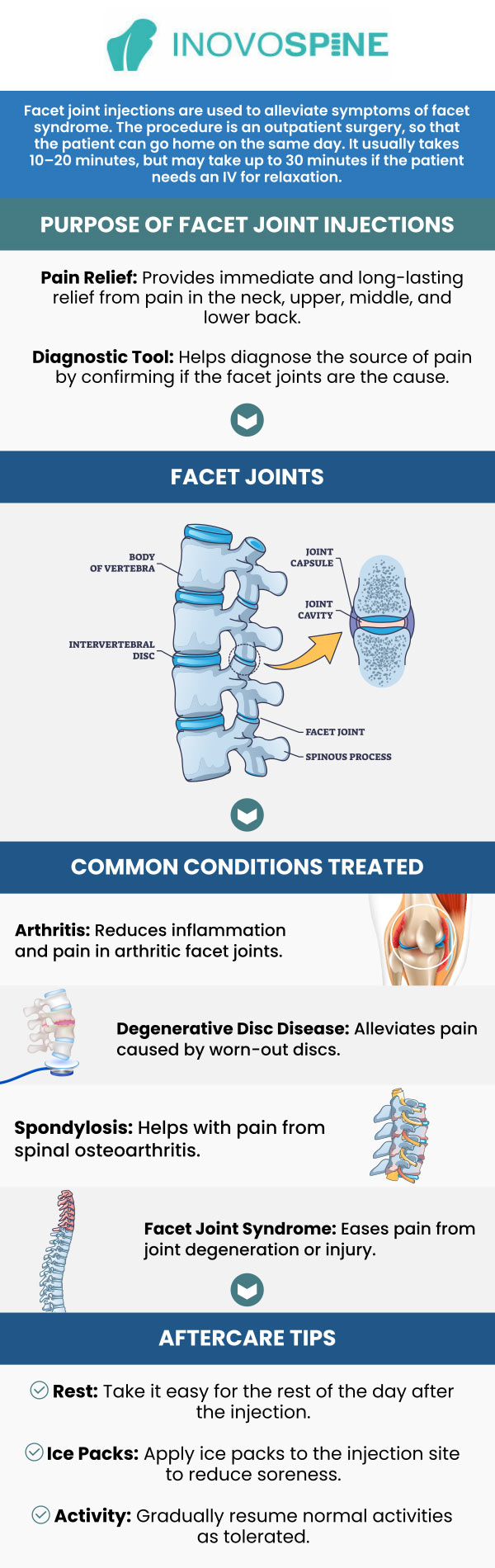
Table of Contents:
What Are Facet Joints and How Do They Contribute to Neck Pain?
How Can Facet Joint Dysfunction Lead to Headaches?
Can Posture or Ergonomics Affect Facet Joint Pain and Headaches?
What Symptoms Suggest That Facet Joints Might Be Causing Chronic Neck Pain and Headaches?
How Does Inovo Spine Evaluate Whether Facet Joints Are the Source of My Chronic Neck Pain and Headaches?
Facet joints are the small, paired joints located on the back of the spine. In the cervical (neck) region, these joints help guide and limit motion, allowing your head and neck to move smoothly while providing stability.
Each vertebra has two facet joints — one on each side — that interact with adjacent vertebrae. These joints are surrounded by cartilage and lubricated with synovial fluid, just like other joints in the body.
How Facet Joints Contribute to Neck Pain
Although they are small, facet joints play an essential role in overall spinal function. When these joints become irritated, inflamed, or arthritic, they can send pain signals that are felt in the neck and surrounding muscles. Common causes of facet joint irritation include:
● Degenerative changes due to aging
● Repetitive strain from poor posture or physical activity
● Trauma or injury such as whiplash
● Arthritis or joint wear
At Inovo Spine, Dr. Pawan Grover evaluates how wear and stress on the cervical facet joints may be contributing to persistent neck pain. When these joints don’t glide correctly or become inflamed, it can lead to chronic discomfort that doesn’t resolve with simple rest or pain medication.
Facet joints in the neck are closely connected to the muscles, nerves, and connective tissues that extend into the head. When these joints are irritated or dysfunctional, they can trigger pain that radiates upward and causes headaches.
Here’s How the Process Works:
1. Joint irritation or inflammation
Dysfunction in the cervical facet joints can irritate nearby sensory nerves.
2. Referred pain pathways
Pain signals from the facet joints can travel along neural pathways that intersect with areas triggering tension‑type or cervicogenic headaches.
3. Muscle tension and spasms
The neck muscles can tighten in response to joint pain, leading to tension that further contributes to headaches.
Types of Headaches Linked to Facet Joint Dysfunction
● Cervicogenic headaches: Pain originating in the neck but perceived in the head
● Tension‑type headaches: Often associated with muscle tightness from prolonged joint stress
Not all headaches are caused by facet joints, but when neck pain and headache occur together — especially with certain movement triggers — the cervical facet joints become a likely suspect.
At Inovo Spine, experienced providers differentiate between headache types by evaluating your neck mobility, pain patterns, and response to movement or pressure — helping determine if facet joint dysfunction plays a role.
Absolutely. In today’s world, many of us spend long hours looking at screens, slouching forward, or holding our necks in unnatural positions. This sustained strain can place excessive pressure on the cervical facet joints, contributing to pain and headaches over time.
Posture and Facet Joint Stress
● Forward head posture: When your head is positioned in front of your body (common with phone or computer use), the weight supported by your neck increases dramatically, stressing the facet joints.
● Rounded shoulders: This can alter the spinal curve and lead to compensatory tension in the neck.
● Prolonged static positions: Sitting or standing without movement creates joint stiffness and inflammation.
Ergonomics Matter
Simple changes in workstation setup, sleeping positions, or daily movement habits can help reduce joint strain. Some ergonomic suggestions that Inovo Spine patients often find beneficial include:
● Aligning computer screens at eye level
● Using supportive chairs with proper lumbar alignment
● Taking frequent micro‑breaks during long tasks
● Practicing gentle neck stretches throughout the day
While posture and ergonomics don’t always eliminate facet joint pain, they play an important role in reducing ongoing irritation and support the effectiveness of clinical treatment.
Facet joint dysfunction doesn’t always look the same in every person, but certain symptoms commonly point providers toward this diagnosis:
Signs and Symptoms May Include:
● Persistent neck pain that does not improve with rest
● Pain that increases with neck extension (looking upward)
● Stiffness in the neck upon waking
● Headaches that begin at the base of the skull and radiate upward
● Pain with prolonged sitting or screen time
● Tenderness when pressing along the back of the neck
● Reduced range of motion
Unlike muscular pain that may improve quickly with rest or anti‑inflammatory medication, facet joint pain often persists and can worsen over time if untreated.
At Inovo Spine, Dr. Pawan Grover pays careful attention to your history of symptoms, triggers, and pain patterns. This helps distinguish facet joint pain from other causes — such as disc degeneration, nerve compression, or soft tissue injury.
Diagnosing the root cause of chronic neck pain and headaches requires a comprehensive approach. At Inovo Spine, our evaluation is patient‑centered, evidence‑based, and thorough.
Here’s what you can expect:
1. Detailed Medical History
Your provider will ask about:
● Onset and duration of pain
● Activities or positions that worsen or relieve symptoms
● Prior injuries or treatments
● Headache patterns and triggers
2. Physical and Neurological Examination
This may include:
● Assessment of neck range of motion
● Palpation to identify tender joints
● Evaluation of muscle strength and reflexes
● Observation of posture and movement patterns
3. Diagnostic Imaging (if needed)
When appropriate, imaging can help confirm facet joint involvement:
● X‑rays: Show joint alignment and degenerative changes
● MRI or CT scans: Provide a closer look at soft tissues, cartilage, and joint abnormalities
4. Diagnostic Injections
In some cases, your provider at Inovo Spine may recommend a facet joint injection or medial branch block. If pain decreases significantly after the injection, this confirms that the facet joint is the primary source of pain.
5. Personalized Treatment Planning
Once facet joint involvement is confirmed, your provider collaborates with you to develop a tailored plan — which may include:
● Physical therapy
● Targeted injections
● Posture and ergonomic coaching
● Activity modification
● Advanced interventional procedures if necessary
At Inovo Spine, the goal is not just to mask symptoms, but to identify the underlying cause and treat it effectively while supporting long‑term spinal health.
Chronic neck pain and associated headaches can be frustrating, especially when they disrupt daily life. If your symptoms have persisted despite rest, pain relievers, or ergonomic adjustments, your facet joints could be playing a significant role. The team at Inovo Spine specializes in diagnosing and treating facet joint dysfunction using a comprehensive, individualized approach.
If you’re experiencing chronic neck pain or headaches and want to get to the root cause, reach out to Inovo Spine today for a full evaluation and personalized treatment plan designed to bring lasting relief. For more information, contact us or book an online appointment. We are conveniently located at 1140 Business Center Dr, Suite 110, Houston TX 77043. We serve patients from Houston TX, Hedwig Village TX, Meadows Place TX, Missouri City TX, Hunters Creek Village TX, Spring Valley Village TX, and surrounding areas.
Additional Service You May Need
- Regenerative Medicine
- Spinal Arthritis
- Diagnostic Mapping
- Interventional Pain
- Minimally Invasive
- Spine Pain
- Radiofrequency Ablation
- Spinal Cord Stimulation
- Physical Rehabilitation
- Facet Joint Pain
- Herniated Discs
- Muscle and Joint Pain
- Post-Laminectomy Pain
- Myofascial Pain
- Peripheral Nerve Pain
- Regional Pain Syndrome






 Send Text
 How May I Help You?